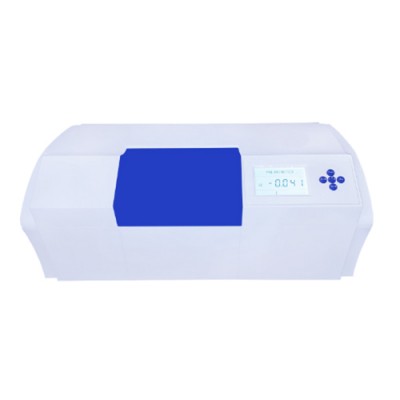
Automatic Polarimeter Manufacturer, Supplier & Exporter in India
The **Automatic Polarimeter** is a world-class optical instrument engineered for the non-destructive measurement of optical rotation in chiral substances. Leveraging advanced photoelectric detection and microprocessor-driven automation, our systems eliminate the subjective errors found in manual visual polarimeters. As a premier **Automatic Polarimeter Manufacturer, Supplier & Exporter in India**, we equip our instruments with high-intensity LED light sources and 589nm interference filters to replicate the Sodium D-line with superior stability and longevity. These systems feature integrated Peltier temperature control for consistent measurement at 20°C or 25°C, ensuring compliance with international pharmacopeia standards. From analyzing the purity of essential oils to calculating the International Sugar Scale (ISS) in refineries, our polarimeters deliver rapid, high-precision data with a single touch, making them indispensable for modern analytical laboratories.
Serving Research Centers Across the Globe
USA, UK, UAE, Australia, Canada, Germany, Singapore, Saudi Arabia, France, Japan, South Africa, Russia, Brazil, Malaysia, Vietnam, Thailand, Kenya, Nigeria, Egypt, Italy, Spain, Mexico, Turkey, Indonesia, Philippines, South Korea, Iraq, and Argentina.
Maharashtra (Mumbai, Pune), Gujarat (Ahmedabad, Surat), Delhi NCR, Tamil Nadu (Chennai, Coimbatore), Karnataka (Bangalore), West Bengal (Kolkata), Punjab, Haryana (Ambala), Uttar Pradesh (Lucknow), Rajasthan (Jaipur), Telangana (Hyderabad), Kerala, Bihar, and Madhya Pradesh (Indore).
The 589nm wavelength corresponds to the Sodium D-line. Historically, all specific rotation data in pharmacopeias were recorded at this wavelength. Our automatic polarimeters use high-precision filters to maintain this standard while providing the stability of modern LED technology.
Optical rotation is highly temperature-dependent. Without stabilization, readings can fluctuate. Our Peltier systems heat or cool the sample chamber to exactly 20°C or 25°C within seconds, ensuring results are consistent regardless of the ambient lab temperature.
Yes. Our advanced photoelectric detection system is capable of measuring dark or turbid samples (up to a certain absorbance level) that would be impossible to read with a manual visual polarimeter, reducing the need for extensive sample filtration.
Our high-end touch screen models support electronic signatures, user access levels, and audit trails, ensuring full compliance with FDA 21 CFR Part 11 requirements for data integrity in pharmaceutical manufacturing.