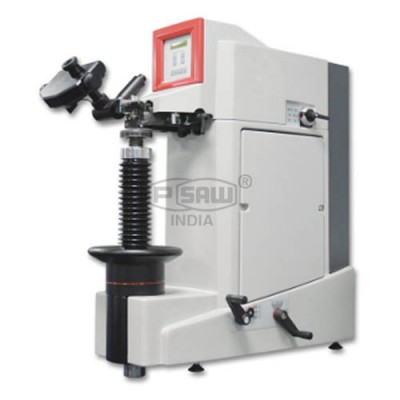
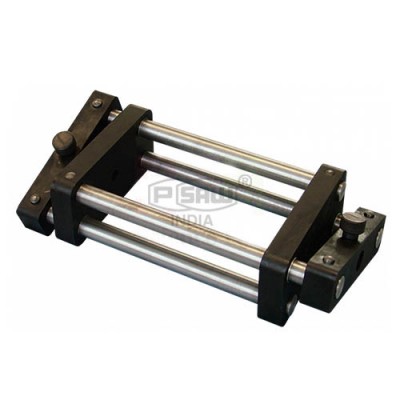
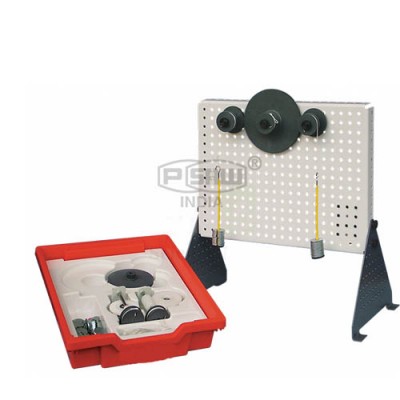
Defining the boundaries of structural endurance. As the premier Materials Testing Lab Equipment Manufacturer in India, PSAW delivers ISO-compliant Universal Hardness Testers, Fatigue Testing Machines, and Strain Gauge Trainers for global metallurgical research.
In a world where engineering failure is not an option, the ability to quantify material limits is paramount. From the alloys used in jet engines to the steel beams supporting high-rise infrastructure, materials testing provides the data that guarantees human safety. At PSAW, we take pride in being a top-tier Materials Testing Lab Equipment Supplier in India, offering a comprehensive suite of diagnostic tools designed to evaluate tensile strength, torsional rigidity, and cyclic fatigue.
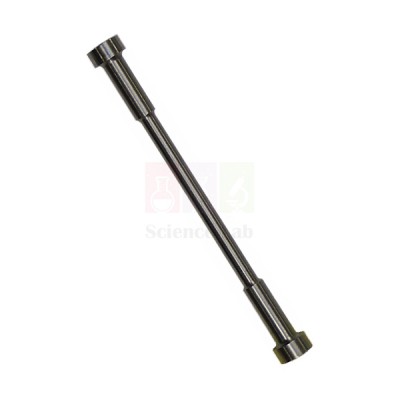
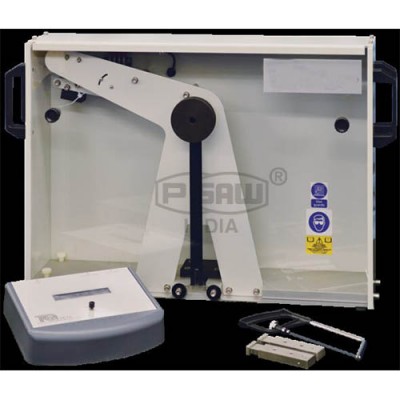
Our laboratory range is meticulously engineered to bridge the gap between theoretical material science and real-world industrial validation. We provide Rotating Fatigue Machines, Cupping Test Apparatus, and Double Shear Test Specimens that meet rigorous ASTM and ISO standards. As a trusted Exporter of Materials Testing Instruments from India, we empower researchers to investigate the microscopic deformation of specimens through advanced Digital Strain Gauge Trainers and Energy Absorption at Fracture units.
Whether you are analyzing the spring performance of automotive suspension or testing the ductility of sheet metal for the manufacturing sector, our instrumentation provides the digital precision required for modern engineering. By manufacturing our equipment in India with high-grade components, PSAW ensures that engineering universities and quality control labs worldwide have access to reliable, reproducible, and robust testing solutions that drive metallurgical innovation and industrial safety.
Critical for verifying the endurance limits of chassis and turbine blades. Our Fatigue Testing Machines help engineers prevent failure in high-stress components.
Used to test the load-bearing capacity of structural steel and concrete. Our Universal Testers ensure safety compliance in modern infrastructure projects.
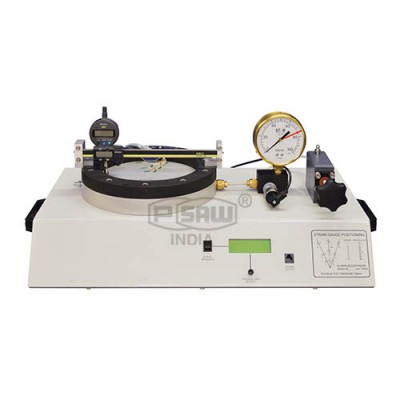
Innovative tools like Strain Gauge Trainers allow researchers to study microscopic deformation, aiding in the development of next-gen smart alloys.
USA, UK, UAE, Germany, Australia, Canada, Singapore, Saudi Arabia, France, Japan, South Africa, Russia, Brazil, Malaysia, Vietnam, Thailand, Kenya, Nigeria, Italy, Spain, Turkey, Indonesia, Iraq, Oman, Kuwait, Qatar, and 85+ nations.
Maharashtra, Gujarat, Delhi NCR, Tamil Nadu, Karnataka, West Bengal, Punjab, Haryana, Uttar Pradesh, Rajasthan, Telangana, Kerala, Mumbai, Pune, Ahmedabad, Bangalore, Kolkata, Hyderabad, Lucknow, Indore, Baddi, and beyond.
Yes, our Universal Hardness Tester models are designed for dual-scale testing, ensuring versatility for different material types and research requirements.
Absolutely. We provide standardized Fatigue and Shear Test Specimens manufactured to precise dimensions, ensuring reproducible data for laboratory sessions.
© PSAW Laboratory Equipments - Manufacturer, Supplier & Exporter of Materials Testing Lab Equipment in India.