Decoding the motion of innovation. As a leading Theory of Machines Lab Equipment Manufacturer in India, PSAW provides industrial-grade Universal Governors, Motorized Gyroscopes, and Static/Dynamic Balancing Units for precision engineering education.
The essence of mechanical design lies in the predictability of motion. From the complex linkages of a robotic arm to the high-speed rotation of an aircraft turbine, understanding the interaction of forces is paramount. At PSAW, we stand as a premier Theory of Machines Lab Equipment Supplier in India, delivering apparatus that bridges the gap between complex vector calculus and real-world mechanical performance.
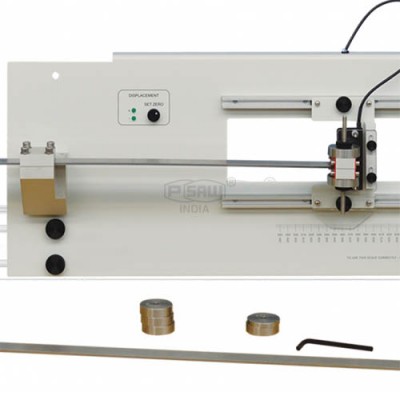
Our laboratory range is engineered for high-fidelity data acquisition. We provide Universal Governor Apparatus to study control stability, and Cam Analysis Units that visualize the precise kinematics of high-speed valve trains. As a global Exporter of Mechanical Lab Equipment from India, our Whirling of Shaft Rigs and Vibration Test Frames are essential for teaching students how to identify resonance and critical speeds—fundamental skills for modern NVH (Noise, Vibration, and Harshness) engineering.
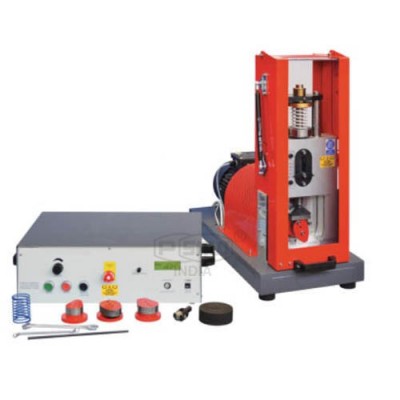
In India's rapidly growing automotive and aerospace sectors, the ability to eliminate imbalance is a core competency. Our Static & Dynamic Balancing Machines and Coriolis Force Apparatus provide the diagnostic accuracy required for high-end research. By manufacturing these robust systems in India, PSAW ensures that technical universities have access to the same precision-level tools used in industrial R&D centers worldwide, fostering a generation of engineers capable of creating silent, efficient, and durable machinery.
Utilizing Epicyclic Gear Trains to teach planetary gear ratios and torque distribution, critical for hybrid and automatic vehicle design.
Focusing on rotor dynamics with our Balancing Units and Whirling Shaft Rigs to ensure safety in steam and gas turbines.
Studying precessional motion and torque using the Motorized Gyroscope, essential for flight stabilization and navigation systems.
USA, UK, UAE, Germany, Australia, Canada, Singapore, Saudi Arabia, France, Japan, South Africa, Malaysia, Vietnam, Thailand, Kenya, Nigeria, Italy, Spain, Turkey, Indonesia, South Korea, Iraq, Oman, Kuwait, Qatar, and 85+ nations.
Maharashtra, Gujarat, Delhi NCR, Tamil Nadu, Karnataka, West Bengal, Punjab, Haryana, Uttar Pradesh, Rajasthan, Telangana, Kerala, Mumbai, Pune, Ahmedabad, Bangalore, Kolkata, Hyderabad, Lucknow, Indore, Baddi, and beyond.
Yes, our Vibration Test Frames come with an exciter motor and speed control to study both free and forced vibration, including the effects of damping.
Absolutely. The kit includes multiple cam profiles and interchangeable followers (Knife-edge, Roller, and Flat-faced) for a complete kinematic study.
© PSAW Laboratory Equipments - Manufacturer, Supplier & Exporter of Theory of Machines Lab Equipment in India.