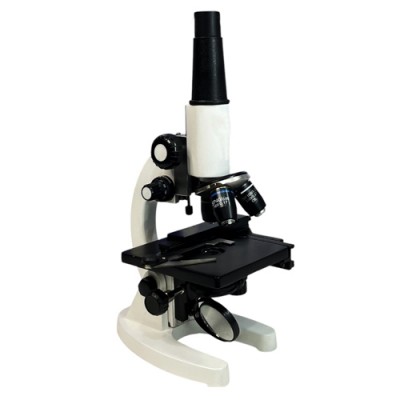
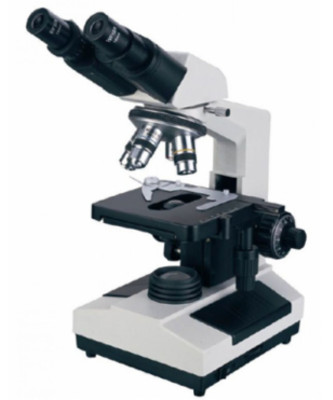
Inspiring the next generation of scientists. As a premier Educational Microscope Manufacturer in India, PSAW provides durable, high-clarity instruments designed specifically for schools, colleges, and basic biological dissection.
Education is about seeing the world in a new way. Our Dissecting and Educational microscopes are built to be user-friendly yet mathematically precise. Whether a student is observing the wing of a butterfly or a teacher is demonstrating plant cell structures, our optics provide a clear, sharp window into the microscopic world.
As a reliable Supplier in India, we understand that school equipment needs to be "student-proof." That’s why our educational range features robust metal construction, locked-in eyepieces, and safety "slip-clutch" mechanisms to prevent slide damage, ensuring these tools last for years in a busy classroom environment.
Perfect for examining whole specimens like flowers, insects, and small organisms. The large working distance of our dissecting models allows students to use tweezers and tools easily.
Designed with safety features to prevent lens breakage. We are a leading Exporter of high-quality, durable school microscopes for educational boards worldwide.
Even our entry-level models use real glass optics—not plastic—ensuring that students develop a genuine passion for science through clear, undistorted viewing.
Unlike compound microscopes, dissecting models are used for 3D viewing of solid objects at lower magnifications, making them ideal for biology dissections and nature study.
Absolutely. As a dedicated Supplier in India, we provide models that meet the specific curriculum requirements for both Middle School and High School Science labs.
Supplying schools and universities in the USA, UK, UAE, Kenya, Nigeria, Singapore, Vietnam, and 75+ other countries.
From rural schools to elite colleges in Delhi, Mumbai, Bangalore, Chennai, Kolkata, Jaipur, and across all Indian states.