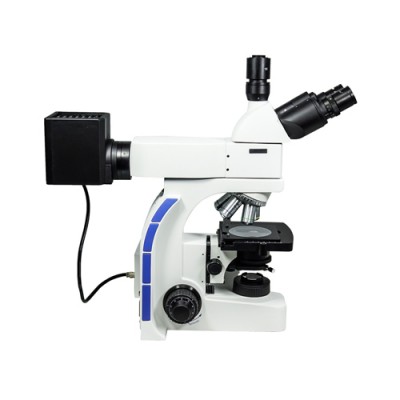
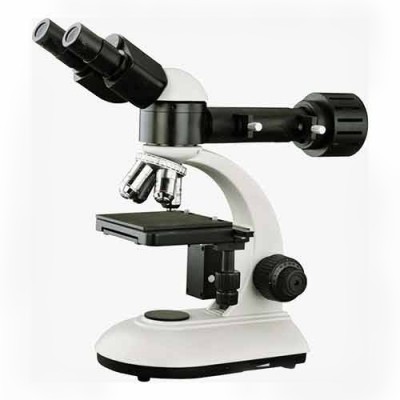
Premium Metallurgical Microscope Manufacturer in India offering advanced Reflected Light, Inverted, and Motorized systems for Industrial Material Science and Grain Analysis.
As a world-class Metallurgical Microscope Manufacturer in India, PSAW provides precision-engineered optical systems designed for the rigorous analysis of opaque materials, alloys, and metals. Unlike standard biological units, our metallurgical range utilizes specialized Epi-Illumination (Reflected Light) to reveal complex surface microstructures. Whether you require the motorized precision of the PSAW-3RT or the versatility of the inverted PSAW-40 series, we are the preferred Metallurgical Microscope Supplier in India for high-end research labs and industrial quality control departments.
Our reputation as a prominent Metallurgical Microscope Exporter is built on delivering instruments that identify grain boundaries, phases, and inclusion distributions with absolute clarity. These systems are essential for predicting mechanical behavior, determining heat-treatment history, and ensuring structural integrity in high-stakes industries like aerospace, automotive, and semiconductor manufacturing.
As an international Exporter, we supply systems for inspecting turbine blades and evaluating fatigue life in advanced composite metals used in defense aviation.
We are a key Supplier in India for automotive engine plants, providing inverted units for analyzing cylinder wear and piston alloy crystalline structures.
Our high-magnification reflected light systems are used by global Manufacturers for wafer inspection and checking micro-circuitry integrity in cleanroom environments.
PSAW serves as a specialized Exporter for forensic departments, assisting in detailed tool-mark identification and ballistics microstructure analysis.
Technologically, our metallurgical systems are unmatched. As a dedicated Metallurgical Microscope Manufacturer in India, we offer:
As an established Exporter, PSAW ensures that all metallurgical units are packed in vibration-resistant flight cases. We provide full optical calibration certificates and global technical support for all our international industrial partners.
PSAW is a premier Metallurgical Microscope Exporter to the USA, UK, Germany, UAE, Saudi Arabia, Singapore, Malaysia, Brazil, and over 90+ countries worldwide.
Leading Metallurgical Microscope Supplier in India serving major industrial hubs: Pune, Ahmedabad, Mumbai, Delhi, Gurgaon, Chennai, Coimbatore, Jamshedpur, and Baddi.