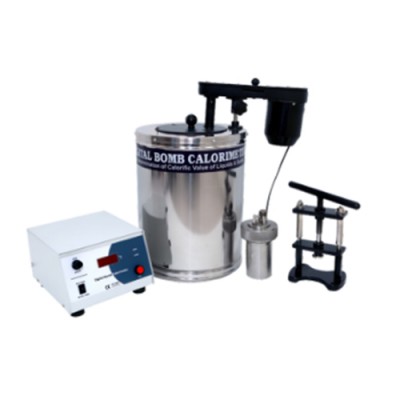
As a globally recognized Bomb Calorimeter Manufacturer in India, we specialize in high-precision instruments designed to determine the Gross Calorific Value (GCV) of solid and liquid fuels. Our systems are engineered for accuracy, safety, and durability, making us a trusted Bomb Calorimeter Supplier in India for power plants, mining industries, and research institutions.
Our Automatic Bomb Calorimeter features a heavy-duty stainless steel vessel capable of withstanding extreme internal pressures. Whether you are analyzing coal, biomass, or petroleum products, our equipment ensures rapid thermal equilibrium. As a leading Bomb Calorimeter Exporter in India, we provide end-to-end solutions including oxygen filling stations and digital ignition units to laboratories across the globe.
USA, UK, Germany, UAE, Australia, Singapore, Saudi Arabia, France, Japan, South Africa, Brazil, Malaysia, Vietnam, Thailand, Kenya, Nigeria, Egypt, Italy, and more.
Maharashtra, Gujarat (Ahmedabad, Surat), Delhi NCR, Tamil Nadu, Karnataka (Bangalore), West Bengal, Punjab, Haryana, Rajasthan, Telangana, and Madhya Pradesh.
As a premier Bomb Calorimeter Manufacturer, we provide instruments that offer an absolute measurement of energy potential. In the era of carbon auditing, knowing the precise calorific value allows industries to optimize fuel combustion and ensure economic viability for power plants and cement factories.
Our Coal Testing Equipment is critical for mining and environmental labs. Beyond fuel, it is a vital tool for the food industry to calculate nutritional calories and for the aviation sector to evaluate the energy density of high-performance propellants.
This instrument is primarily used to perform high-pressure combustion in an oxygen-saturated atmosphere. As a leading Bomb Calorimeter Supplier in India, we ensure our devices are perfect for calculating the water equivalent of calorimeters using standard benzoic acid and conducting routine quality control for incoming fuel batches in the steel and thermal industries.