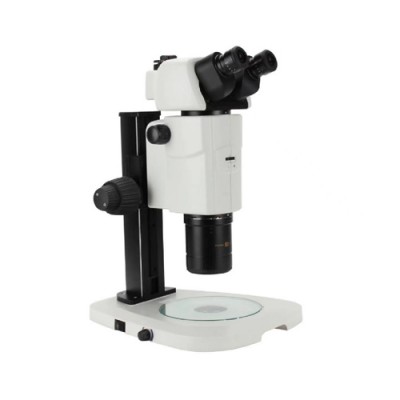
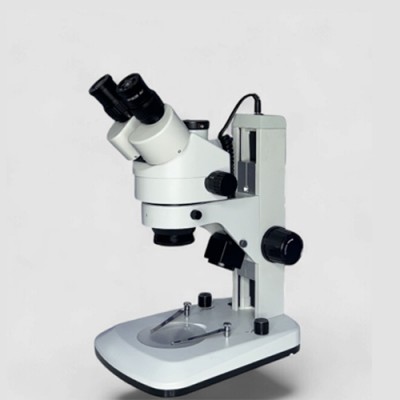
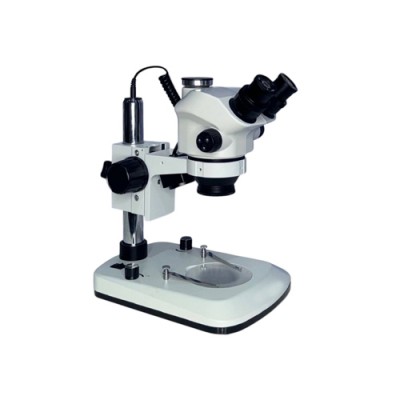
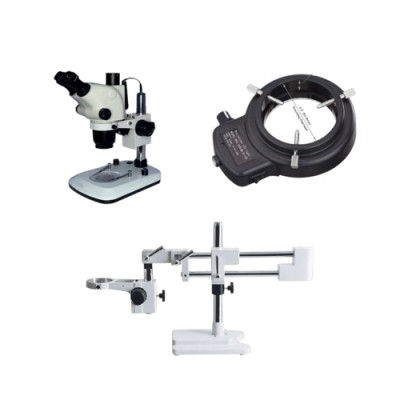
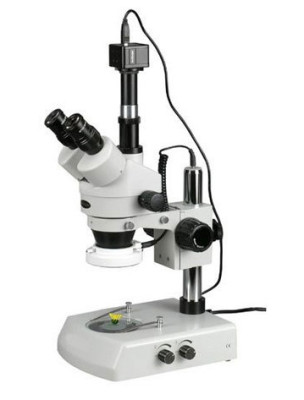
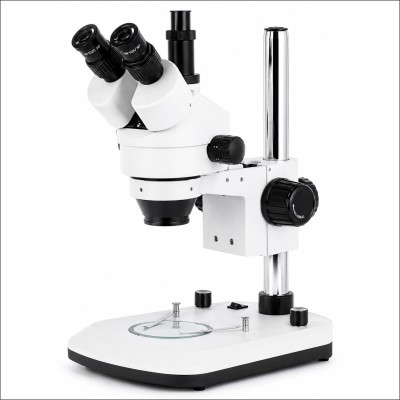
Experience unparalleled 3D depth and optical clarity. PSAW is a leading Stereo Zoom Microscope Manufacturer in India, delivering precision-engineered continuous zoom systems for electronics, jewelry analysis, and biological research.
Our Stereo Zoom Microscope series is designed to bridge the gap between macroscopic observation and microscopic detail. As a globally recognized Stereo Zoom Microscope Exporter, PSAW provides instruments featuring a continuous zoom mechanism that allows for smooth transitions between magnifications without refocusing.
Whether it is the PSAW-818 or our 4K digital integrated models, we are the Supplier in India of choice for high-eyepoint optical systems. These units offer an exceptionally long working distance, making them indispensable for PCB repair, jewelry stone grading, and micro-dissection. The ergonomic design ensures that specialists can perform high-speed industrial workflows with minimal eye strain.
Essential for soldering, circuit board repair, and inspecting micro-components. We are the leading Supplier in India for smartphone repair labs.
Our instruments allow for detailed internal inclusion analysis and stone grading, exported to global jewelry hubs like the UAE and Belgium.
As a premier Manufacturer, we provide entomologists and botanists with high-depth optics for micro-dissection and specimen archiving.
Used globally for trace evidence analysis, including hair, fiber, and ballistics, ensuring precision data for criminal investigations.
The significance of the PSAW Stereo Zoom series lies in Stereopsis (Depth Perception). Unlike standard microscopes, our dual-optical paths provide a true 3D image, critical for manipulating samples with micro-tweezers or surgical tools. By maintaining a flat and sharp image across the entire zoom range, we ensure that industrial quality control specialists can identify structural defects that would be invisible under 2D magnification.
Most PSAW models offer a standard 100mm working distance. As a Manufacturer in India, we also provide auxiliary lenses to extend this distance for specialized industrial tasks.
Yes, we export Trinocular models equipped with C-mount adapters and inbuilt 4K cameras for high-resolution image archiving and live streaming.
USA, UK, UAE, Germany, Australia, Singapore, Saudi Arabia, Japan, South Africa, Russia, Brazil, Malaysia, Vietnam, Thailand, Italy, Spain, Turkey, and 85+ other countries.
Maharashtra, Gujarat, Delhi NCR, Tamil Nadu, Karnataka, Punjab, Haryana, Rajasthan, Telangana, Kerala, Mumbai, Pune, Ahmedabad, Bangalore, Chennai, and Baddi.