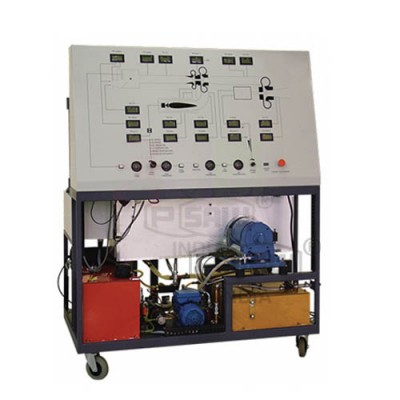
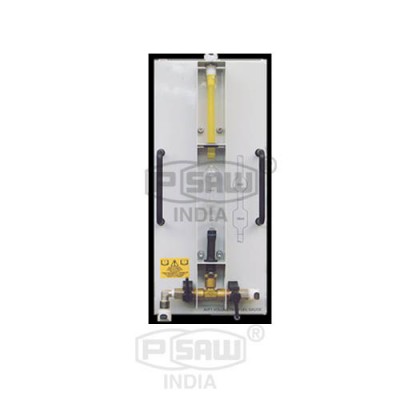
Bridging the gap between mechanical power and automated intelligence. As a leading Engines & Process Control Lab Equipment Manufacturer in India, PSAW provides world-class PLC Trainers, Gas Turbines, and IC Engine Test Rigs for the next generation of smart manufacturing.
In an era defined by Industry 4.0 and the global shift toward carbon neutrality, the study of engine performance and automated control has never been more critical. At PSAW, we specialize in creating high-fidelity laboratory environments that simulate complex industrial scenarios. As a prominent Process Control Lab Equipment Supplier in India, we provide Industrial PLC Trainers and PID Control Units that allow students to master the logic behind modern factory automation, from pressure regulation to high-speed robotic sequences.
Our thermal power division offers robust diagnostic tools, including 4-Stroke Diesel Engine Test Rigs and Two-Shaft Gas Turbines. These systems are not just educational tools; they are high-precision research instruments designed to analyze thermodynamic cycles, fuel atomization, and emission profiles. Being a global Exporter of IC Engine Lab Equipments, our trainers are found in leading technical universities where researchers work on optimizing fuel efficiency and reducing the environmental footprint of heavy-duty propulsion systems.
Safety and reliability are at the core of our design philosophy. Each Engine Management Lab Tool and Exhaust Gas Calorimeter manufactured in India by PSAW undergoes rigorous quality checks to ensure data accuracy. We understand that in the petrochemical and aerospace sectors, even a millisecond of lag in a control loop can be catastrophic. Our Computerized Process Trainers help engineers simulate these stress points, providing them with the analytical skills to design more stable, autonomous, and efficient industrial ecosystems worldwide.
Used to analyze brake power and mechanical efficiency. Our multi-gas analyzers integrated with test rigs help in monitoring Euro-VI and BS-VI compliance profiles.
Our PLC and SCADA trainers empower engineers to design self-correcting production lines, mastered through hands-on PID tuning and sensor calibration.
With two-shaft gas turbines, researchers can independently control compressor and turbine speeds, providing deep insights into jet propulsion dynamics.
USA, United Kingdom, UAE, Germany, Australia, Canada, Singapore, Saudi Arabia, France, Japan, South Africa, Russia, Brazil, Malaysia, Vietnam, Thailand, Kenya, Nigeria, Italy, Spain, Turkey, Indonesia, Philippines, South Korea, Iraq, Oman, Kuwait, Qatar, and 85+ nations.
Maharashtra, Gujarat, Delhi NCR, Tamil Nadu, Karnataka, West Bengal, Punjab, Haryana, Uttar Pradesh, Rajasthan, Telangana, Kerala, Mumbai, Pune, Ahmedabad, Bangalore, Kolkata, Hyderabad, Lucknow, Indore, Baddi, and major industrial cities.
Our Industrial Process Trainers are modular and can be configured with Siemens, Rockwell Automation, Schneider, or Mitsubishi PLCs, supporting protocols like Modbus and Profinet.
Absolutely. The Two-Shaft Gas Turbine Lab includes high-precision flow meters and digital data acquisition for real-time specific fuel consumption (SFC) and thermal efficiency plotting.
© PSAW Laboratory Equipments - Manufacturer, Supplier & Exporter of Engines & Process Control Lab Equipment in India.