Digital Viscometer Manufacturer, Supplier & Exporter in India
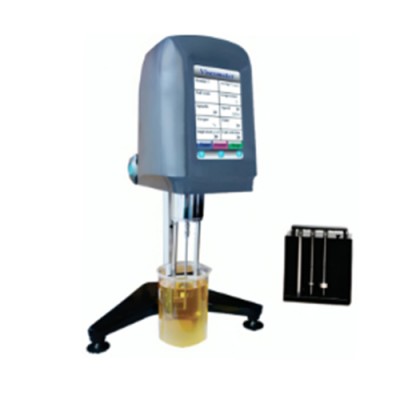
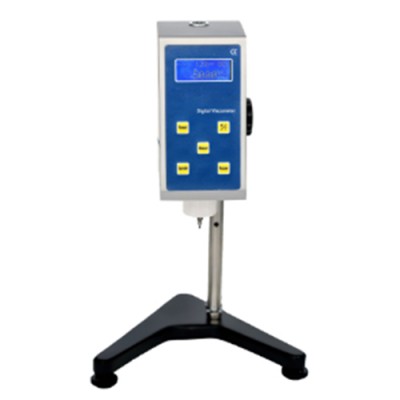
The **Digital Viscometer** is a cornerstone of modern rheological analysis, specifically engineered to measure the dynamic viscosity of fluids with unmatched precision. Utilizing rotational viscometry technology, our instruments assess the internal friction of a liquid by measuring the torque required to rotate a submerged spindle at a constant speed. As a globally recognized **Digital Viscometer Manufacturer, Supplier & Exporter in India**, we provide a range of instruments from entry-level digital models to advanced touch-screen systems with integrated Peltier temperature control. These devices are equipped with high-performance stepper motors and microprocessor-driven logic to ensure noise-free operation and repeatable accuracy. Whether you are analyzing the shear-thinning properties of a polymer or the consistency of a pharmaceutical ointment, our viscometers deliver real-time data on viscosity (cP/mPa·s), shear rate, and shear stress, providing the critical insights needed for process optimization and quality assurance.
A critical significance of our digital viscometer is its ability to differentiate between fluid types. Newtonian fluids (like water or oil) maintain constant viscosity regardless of shear, while Non-Newtonian fluids (like blood, ketchup, or paint) change viscosity depending on the applied force. Our instruments allow scientists to plot "Viscosity vs. Speed" curves, essential for understanding how a product will behave during pumping, spreading, or swallowing.
In the chemical sector, viscometers are used to monitor polymerization reactions in real-time. In the cosmetics industry, they ensure that lotions and shampoos have the perfect "pour" and "feel." Petroleum engineers rely on our heavy-duty models to test drilling mud and lubricants under varying thermal conditions, while food scientists use them to standardize the texture of dairy, honey, and chocolate batches.
Beyond simple testing, the operational use of a digital viscometer extends to full rheological characterization. With variable speed controls (0.1 to 200 RPM) and a suite of spindles (L1-L4 or R1-R7), users can simulate industrial processes like mixing, spraying, or coating. The integration of high-precision RTD temperature probes ensures that data is corrected for thermal fluctuations, which is vital for pharmaceutical batch stability.
Exporting Quality to 35+ Nations
Dynamic Viscosity (measured by our digital viscometer) is the internal resistance to flow under an applied force, measured in Centipoise (cP). Kinematic Viscosity is the resistance to flow under gravity alone, measured in Centistokes (cSt), and is calculated by dividing dynamic viscosity by the fluid's density.
FSR represents the maximum viscosity a specific spindle/speed combination can measure. For high accuracy, it is recommended to select a combination where your sample reading falls between 10% and 100% of the FSR torque. Our digital models provide an auto-range function to help you identify this instantly.
Yes. While standard testing requires a 500ml beaker, we offer specialized "Small Sample Adapters" (SSA) that allow for precise viscosity measurement using as little as 2ml to 16ml of fluid, which is ideal for expensive pharmaceutical or biological reagents.
Every time you power on our Digital Viscometer Pro, it performs an 'Auto-Zero' to calibrate the internal spring and motor. The 'Auto-Range' feature calculates the maximum measurable viscosity for any spindle/speed setup, protecting the instrument from over-torque damage.