

Electronics and electrical engineering are fields driven by both theoretical knowledge and hands-on practice. While books and lectures provide conceptual foundations, a fully equipped laboratory is where engineering concepts come to life. Whether you are establishing an engineering college electronics lab equipment suite, upgrading a university research facility, or assembling a personal hardware development setup, having a well-structured electronics lab apparatus is essential.
This guide explores every critical aspect of setting up a modern electronics laboratory. We will examine essential basic electronics laboratory apparatus, fundamental basic electronics lab components, and high-precision electronic testing equipment necessary for analyzing, debugging, and building electronic circuits.
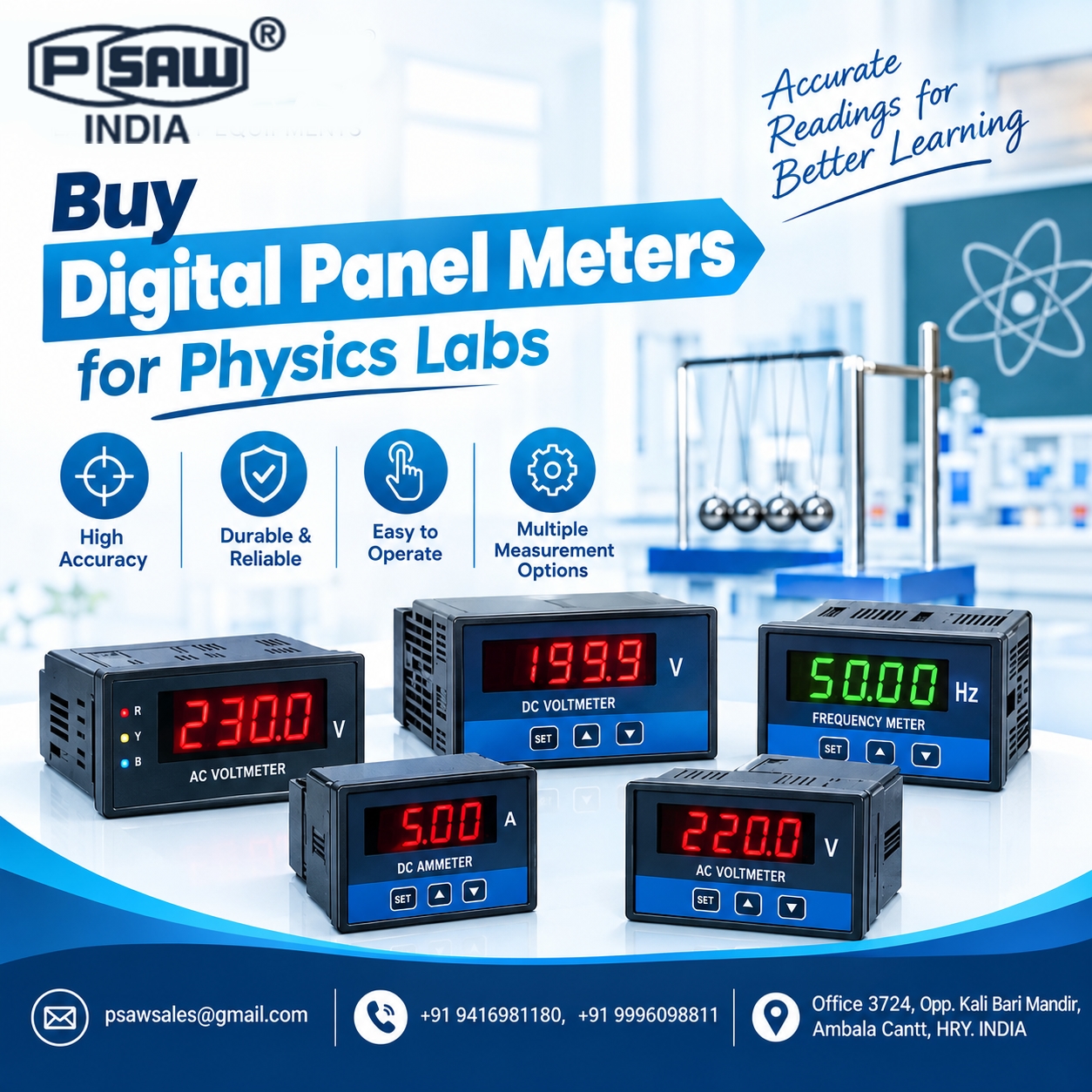
The Role and Importance of an Electronics Laboratory
An electronics laboratory serves as the bridge between theoretical circuit design and real-world hardware implementation. From simple passive filters to complex embedded microcontrollers, physical testing reveals parameters that simulations often overlook—such as parasitic capacitance, electromagnetic interference, component tolerances, and thermal dissipation.
A well-planned laboratory environment offers key benefits:
-
Hands-on Skill Acquisition: Students and engineers gain practical confidence in building circuits, soldering, and taking physical measurements.
-
Troubleshooting and Debugging: Learning to identify circuit faults using electronic testing equipment builds crucial diagnostic skills.
-
Prototyping and Innovation: A complete stock of tools and instruments empowers engineers to transform circuit schematics into working prototypes.
Comprehensive Electronics Lab Equipment List
Every standard electronics lab relies on a core set of benchtop instruments. Below is the primary electronics lab equipment list detailing the core testing and measuring devices required for electrical analysis.
A. Digital Storage Oscilloscope (DSO) / Cathode Ray Oscilloscope (CRO)
The oscilloscope is the primary visual tool in any electronics lab. It displays signal voltage over time, allowing engineers to view waveforms, measure amplitudes, calculate frequencies, and detect noise or distortion.
-
Key Functions:
- Displays AC, DC, and complex pulsed signals.
- Measures peak-to-peak voltage, RMS voltage, signal frequency, and phase shifts.
- Captures transient events and single-shot signals (on DSOs).
-
Role in Education: In any engineering college electronics lab equipment setup, multi-channel DSOs (typically 50 MHz to 100 MHz bandwidth) are crucial for teaching signal processing, modulation, and amplifier design.
B. Function / Arbitrary Waveform Generator
To analyze how a circuit behaves, test signals must be injected into its input. A Function Generator produces precise alternating signals across a wide frequency range.
-
Common Waveforms Generated:
- Sine Wave: Used for audio frequency testing, filter analysis, and amplifier linearity checks.
- Square Wave: Used for clock signals, digital switching, and transient response testing.
- Triangular & Sawtooth Waves: Used for sweep generators and pulse-width modulation (PWM) testing.
C. Digital Multimeter (DMM)
The Digital Multimeter is the most frequently used piece of electronic testing equipment. Available in both portable handheld formats and high-precision benchtop versions, a DMM provides quick numerical readings of electrical properties.
-
Primary Measurement Functions:
- Voltage (AC & DC): Measures potential difference across components.
- Current (AC & DC): Measures current flow through a branch (connected in series).
- Resistance: Checks resistor values and traces circuit paths.
- Continuity & Diode Testing: Emits an audible tone when a closed path exists and measures forward voltage drop across semiconductor junctions.
D. Regulated Variable DC Power Supply
Electronic components require stable, controlled DC voltages to operate safely. A Regulated DC Power Supply converts AC mains voltage into smooth, adjustable DC outputs with built-in current-limiting protection.
-
Recommended Specifications:
- Dual-channel or triple-channel outputs
- Constant Voltage (CV) and Constant Current (CC) operation modes.
- Independent output tracking for symmetrical operational amplifier supply lines
E. LCR Meter
While a standard multimeter can measure basic resistance, an LCR meter is dedicated to measuring Inductance (L), Capacitance (C), and Resistance (R) with extreme accuracy across various test frequencies. It also measures secondary parameters such as Quality Factor (Q), Dissipation Factor (D), and Equivalent Series Resistance (ESR).
Essential Basic Electronics Laboratory Apparatus
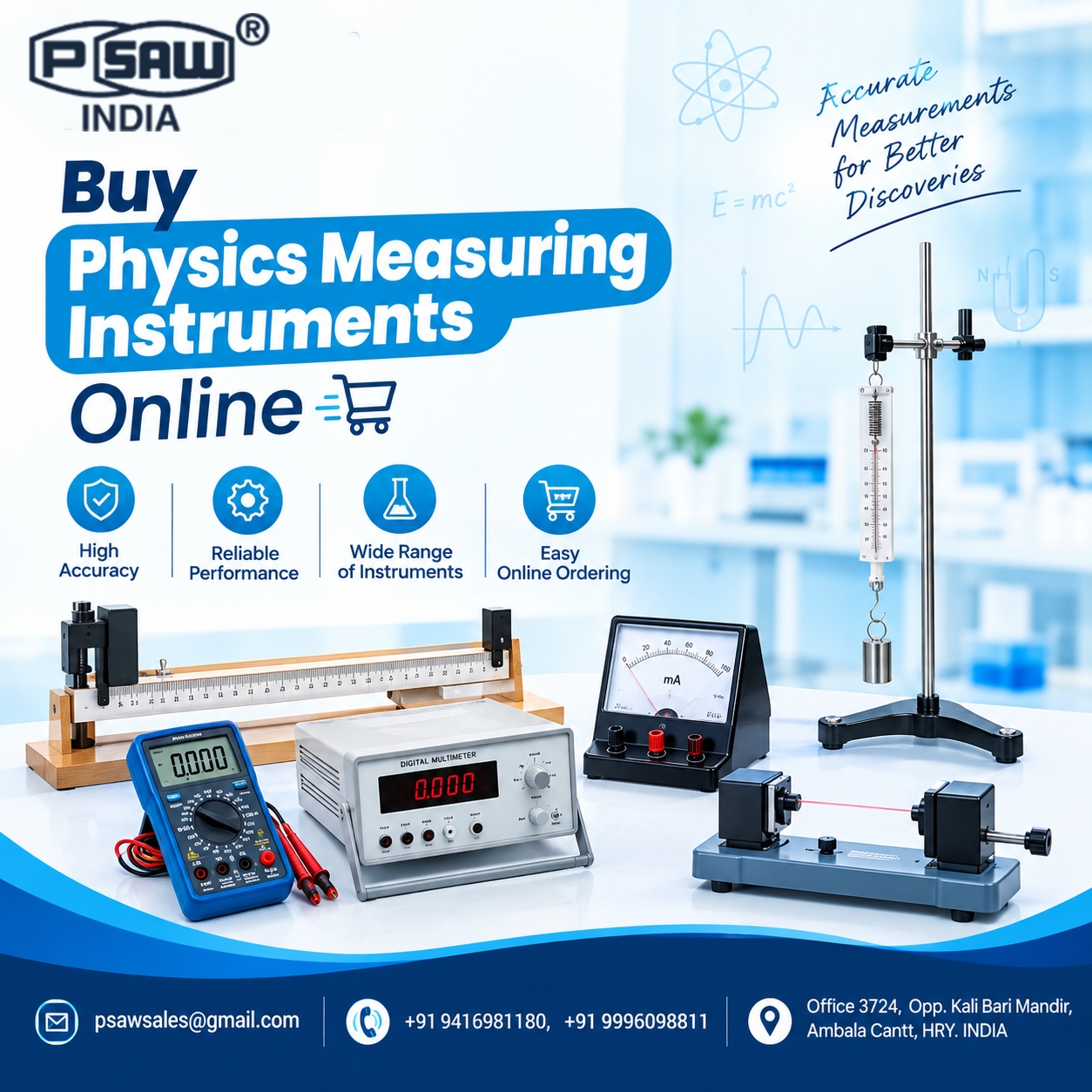
Beyond benchtop instruments, every practical workshop requires a collection of hardware tools, assembly boards, and physical accessories. These items form the basic electronics laboratory apparatus needed to construct and modify physical circuits.
A. Solderless Breadboards and Jumper Wires
Breadboards are the standard platform for temporary circuit prototyping without permanent soldering.
-
Construction: They feature internal spring-metal clips arranged in rows and power bus strips.
-
Jumper Wires: Solid-core or flexible wire leads with Male-to-Male, Male-to-Female, and Female-to-Female pin connectors allow rapid interconnections between breadboard tie-points and external hardware.
B. Soldering and Desoldering Station
When a circuit design is finalized and ready for permanent assembly on a Printed Circuit Board (PCB) or perforated board (zero-board), soldering tools are required.
-
Temperature-Controlled Soldering Station: Allows fine adjustments of tip temperature to prevent thermal damage to sensitive semiconductors.
-
Desoldering Pump (Solder Sucker) & Wick: Essential tools for removing excess solder during repairs or component replacement.
-
Consumables: Lead-free or rosin-core solder wire, soldering flux paste, and tip cleaner brass sponges.
C. Hand Tools and Mechanical Accessories
-
Precision Wire Strippers & Cutters: Designed for stripping wire insulation cleanly without cutting the internal copper conductors.
-
Needle-Nose Pliers & Tweezers: Essential for placing small Surface-Mount Devices (SMD) and bending component leads cleanly.
-
Anti-Static ESD Wrist Straps & Mats: Protect static-sensitive ICs (such as CMOS microcontrollers and MOSFETs) from Electrostatic Discharge damage.
4. Fundamental Basic Electronics Lab Components
A laboratory is incomplete without an organized stock of passive and active electronic parts. Having a structured inventory of basic electronics lab components enables students and engineers to prototype without delays.
???????????????????????????????????????????
?      BASIC ELECTRONIC COMPONENTS        ?
???????????????????????????????????????????
                     ?
     ?????????????????????????????????
     ?                               ?
?????????????????????????       ?????????????????????????
?   PASSIVE COMPONENTS  ?       ?   ACTIVE COMPONENTS   ?
?????????????????????????       ?????????????????????????
     ?                               ?
  ?? Resistors                    ?? Diodes (Rectifier, Zener, LED)
  ?? Capacitors                   ?? Transistors (BJT, MOSFET)
  ?? Inductors & Transformers     ?? ICs (Op-Amps, Timers)
A. Passive Components
Passive components do not generate energy or require external power to modulate signals.
-
Resistors:
- Fixed Resistors: Carbon film and metal film resistors across standard values.
- Variable Resistors: Potentiometers, rotary trimpots, and rheostats for calibration and volume control.
-
Capacitors:
- Ceramic Disc Capacitors: Non-polarized, ideal for high-frequency filtering and decoupling.
- Electrolytic Capacitors: Polarized, offering higher capacitance values for DC power supply smoothing.
-
Inductors and Chokes: Used for RF filtering, energy storage in switching regulators, and tuned LC tank circuits.
B. Active Components
Active components rely on an external power source to control electrical current and amplify signals.
-
Diodes:
- General Purpose Rectifier Diodes: e.g., 1N4007 for AC-to-DC rectification.
- Signal Diodes: e.g., 1N4148 for high-speed switching.
- Zener Diodes: Used for voltage regulation and over-voltage protection.
- Light Emitting Diodes (LEDs): Used for visual indicators and optocouplers.
-
Transistors:
- Bipolar Junction Transistors (BJTs): NPN (BC547, 2N2222) and PNP (BC557) models for switching and low-noise amplification.
- Field-Effect Transistors (FETs/MOSFETs): e.g., IRF540N for high-current switching and power management.
-
Integrated Circuits (ICs):
- Operational Amplifiers: LM741 (single op-amp), TL084 (quad JFET op-amp) for analog computing and active filters.
- Timer ICs: NE555 timer for pulse generation, oscillators, and time-delay circuits.
- Voltage Regulators: 78XX series and LM317 for adjustable outputs.
Engineering College Electronics Lab Equipment Standards
In academic settings, laboratory facilities are structured to align with curriculum milestones—progressing from basic circuit laws to advanced embedded systems. Selecting the right engineering college electronics lab equipment ensures students receive relevant industry training.
A. Basic Electrical & Circuit Theory Lab
-
Focus: First-year engineering fundamentals.
-
Key Equipment: Verification kits for Ohm's Law, Kirchhoff's Laws (KCL/KVL), Thevenin's and Norton's Theorems, Maximum Power Transfer Theorem, and AC bridge networks (Maxwell, Hay, and Wien bridges).
B. Analog Electronics & Integrated Circuits Lab
-
Focus: Transistor biasing, operational amplifier design, and wave-shaping networks.
-
Key Equipment: Amplifier trainer boards (CE, CB, CC configurations), Feedback Amplifier Trainer Kits, RC Phase-Shift and LC Oscillator Boards, Precision Waveform Shapers, and Analog IC Testers.
C. Digital Electronics & Logic Design Lab
-
Focus: Boolean algebra, combinational logic, and sequential logic design.
-
Key Equipment:
- Digital Logic Trainer Kits: Built-in breadboards, debounced logic switches, LED status indicators, and variable clock sources.
- Logic Gate ICs: 74HC series
- Digital IC Testers: Dedicated devices to quickly verify functional logic gates, counters, and flip-flops.
D. Microcontroller, Embedded Systems, and IoT Lab
-
Focus: Embedded software development, hardware interfacing, and real-time control.
-
Key Equipment:
- Legacy Microprocessor Training Kits (8085 / 8086) for learning low-level assembly language and machine architecture.
- 8051, PIC, and AVR Microcontroller Development Boards.
- Modern Development Platforms: Arduino Uno/Mega, STM32 Nucleo, Raspberry Pi, and ESP32 IoT boards.
- Peripheral Interfacing Modules: Character LCDs, OLED displays, stepper motor drivers, ADC/DAC modules, and sensor arrays.
Safety Standards and Maintenance Procedures for Testing Instruments
Handling electrical equipment requires strict adherence to safety protocols to prevent personal injury and avoid damaging costly electronic testing equipment.
A. Essential Safety Rules
-
Proper Grounding (Earthing): Ensure that all three-prong benchtop instruments share a common earth ground to eliminate stray potentials and prevent electrical shocks.
-
Current Limiting: Always set the DC power supply current limit to a safe threshold before powering on a new prototype circuit.
-
Polarity Verification: Double-check DC power leads and polarized electrolytic capacitors before applying power. Reverse polarity can cause components to rupture or overheat.
-
ESD Protection: Always wear an anti-static wrist strap connected to an ESD ground point when handling static-sensitive ICs and microcontrollers.
B. Instrument Maintenance & Calibration
-
Annual Calibration: Oscilloscopes, multimeters, and high-precision signal sources should undergo periodic calibration against certified standards to maintain measurement accuracy.
-
Environmental Control: Keep the laboratory dust-free and maintain ambient temperatures around. Use protective dust covers over instruments when not in use.
-
Cable and Probe Inspection: Inspect oscilloscope probes and multimeter leads regularly for frayed insulation, damaged ground clips, or loose connectors.

Conclusion
Setting up an efficient, modern laboratory requires careful planning, standard safety measures, and strategic equipment selection. A complete electronics lab equipment list balances core instruments with flexible hardware components.
By combining foundational basic electronics laboratory apparatus—such as breadboards, soldering stations, and hand tools—with a diverse stock of basic electronics lab components, engineers and students can design, test, and build complex projects. Furthermore, investing in reliable electronic testing equipment like Digital Storage Oscilloscopes, Function Generators, and Digital Multimeters ensures precise signal analysis and rapid debugging.
For academic institutions, choosing standardized engineering college electronics lab equipment prepares students for real-world industrial practices, equipping them with the practical expertise needed for careers in hardware engineering, robotics, power electronics, and telecommunications.
Frequently Asked Questions (FAQ)
Q1. What is the most essential equipment needed in a basic electronics lab?
Ans: The most essential benchtop equipment includes a Digital Multimeter (DMM) for basic electrical measurements, a Regulated DC Power Supply to power circuits safely, a Digital Storage Oscilloscope (DSO) to visualize waveforms, and a Function Generator to inject test signals. Additionally, a solderless breadboard and jumper wires are necessary for prototyping.
Q2. What is the difference between active and passive electronics components?
Ans:
- Passive Components (e.g., Resistors, Capacitors, Inductors) do not require an external power source to operate and cannot amplify or control electric current on their own.
- Active Components (e.g., Transistors, Diodes, Integrated Circuits) rely on an external power source to control the flow of electricity, amplify signals, or perform switching operations.
Q3. Why is an oscilloscope preferred over a multimeter for AC signal testing?
Ans: A digital multimeter only provides a static numerical value (such as RMS voltage or frequency), whereas an oscilloscope displays the real-time visual waveform of a signal over time. This allows engineers to see signal distortion, noise, peak-to-peak amplitude, rise time, and phase shifts that a multimeter cannot display.
Q4. What safety precautions should be taken in an engineering college electronics lab?
Ans: Key safety precautions include:
- Ensuring all benchtop instruments are properly grounded (earthed).
- Setting current limits on power supplies before energizing circuits.
- Checking power supply polarity before powering up breadboards.
- Wearing anti-static ESD wrist straps when handling static-sensitive ICs.
- Keeping liquid containers away from testing stations.
Q5. How often should electronic testing equipment be calibrated?
Ans: High-precision instruments like DSOs, multimeters, and LCR meters should typically be calibrated once every 12 months (or as recommended by the manufacturer) to ensure accurate readings and maintain compliance with academic and industry standards.
Q6. What is the difference between a DSO and a CRO?
Ans: A Cathode Ray Oscilloscope (CRO) uses an analog vacuum tube to display signals in real-time but cannot store waveform data. A Digital Storage Oscilloscope (DSO) digitizes analog signals, allowing users to freeze, store, analyze, and export waveform data via USB for further analysis on computers.